Bernard Gray Interviews

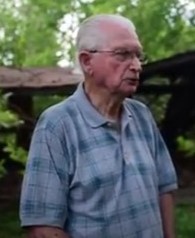
Below are notes from several interviews with Bernard Gray of Medora conducted in 2005. Few if any knew the brickmaking process at the plant as well as the plant history. Mr. Gray as he was called, was then 75. He first worked at the plant his junior and senior years in high school, then left to serve during the Korean War. He returned to the plant and would in 1968 succeed his father, Ralph, as plant superintendent. Mr. Gray passed in 2023 at age 92
Some of what he said has been incorporated into the History and Brickmaking pages on this website. But in order to keep those pages a quicker read, all of what he told me about the plant is included here. So the reader will find some duplication of information on the site.
Wonderful interview and plant site images - done by Mr. Gray's nephew, Daryl Robinson, in 2018.
- Steve Graves, plant historical marker applicant with ancestors from Jackson County
and most specifically the Henderson and the Rudder families surnames of the 1820s-1930s to now.

February 20, 2005 Phone Call Interview
Getting started at the plant - brickmaking - the plant's final years
When the plant went bankrupt in 1924, Mr. Heller (John W. Heller, farmer, wife Margaret, and son James P.) and Mr. Joseph "Joe" Robertson bought the Medora plant for $30,000 at auction. They owned also the Jackson Brick and Hollow Ware plant in Brownstown. John W.'s son, James "Jim" P. Heller (1910-2000), of the Brownstown area would later take over as president of the company through the Medora plant's closing in January of 1992.
Getting Started at the Plant
Bernard Gray’s father, Ralph, went to work at the plant in 1925 as it came under the ownership of Heller and Robertson. Bernard's brother, Erridine was the brick plant salesman 1946-1969. Mr. Gray worked at the plant first at the age of 16 in 1946. After his Junior and Senior years in school he went into military service during the Korean War time and returned to work in the plant In 1948. He became the Superintendent the first of Feb. 1968 and served in that position until the plant closed in January 31, 1992 – 24 years to the day as boss! A 46 year span at the plant!
Bernard Gray knows the entire brick making process and much of the plant's history. He told that plant originally made mostly ‘paving block’ commonly called street paving brick. About an inch from each end of the brick there was a raised (1/8 inch) dimple that was purposefully placed there to keep shod horses from slipping as they traveled on the brick streets. Some Medora paving block had four dimples, some two. So a ‘Medora Block' stamped brick with dimples near each end is circa 1923 or earlier. In the early 1920's bricking streets gave way to concrete such that business slowed and the company went into bankruptcy, was purchased and restarted in 1923. Thereafter they produced mostly wall brick for facing buildings. In 1900 there were approximately 52 brick companies in Indiana.
Brick Making
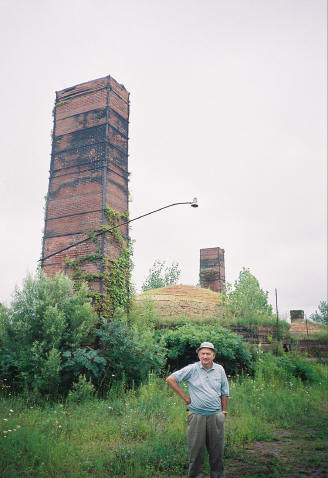
The Medora Brick Plant kilns are about 30 feet in diameter. The walls - 8 feet high and 24 inches thick. The domes ceiling/roofs were self supporting sitting on the walls. When loaded and processed each kiln (1950’s-1992) was to yield 70,000 saleable brick from the 72,000 to 73,000 brick that it contained per firing. A three to five percent loss. It took about 1 lb. of coal (that generated the heat) to produce one brick.
Bricks were placed in the kiln 30 high, then brick would be laid up to close the doors and then mudded over. Then heat was put to the kiln to fire the brick.
When were the brick ready? There was a 6 to 8 inch opening at the top of the dome and that was covered with a steel plate. The distance down to the top of the brick pile was measured and after days of raising the temperature kiln the brick were ready when there was a "12 ½ inch settle" - which was a measurement down from the opening at the top of the kiln … the net measurement comprised of expansion (upward) of the dome itself as well as the settling of the brick stack below.
It has been said that the plant would make up to 54,000 bricks per day which was 324,000 brick per week - didn't get confirmation of those numbers from Mr. Gray. It took 21 days from quarrying material on through till the brick was on the job site as a product.
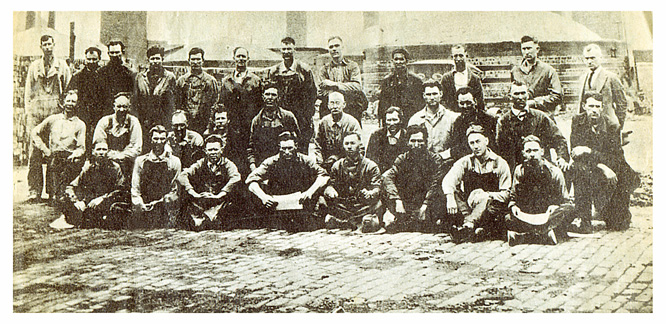
At some point (year/s ?) it took 45 men to operate the plant. And with Medora having a small population, that was a large percentage. When the company quarried material by team horses, sledge, and dynamite it took about 8 more employees than when shale was quarried by large shovel equipment and trucks. After 1938-1940 material was trucked in from a sight about a mile north of Medora.
"Clay" is the broad term including dirt, sand, shale. But "Shale" is the more specific 'clay only' term.
Bricks went to Purdue University, Ball St., Hanover College, Univ. Kentucky. They went to Cincinnati and Chicago, Detroit, and other Midwestern cities to brick up portions of brick buildings. The plant did also produce brick to custom order - bricks of unique sizes, shapes and finishes.
Plant's Final Years
When the plant closed Jan. 31, 1992 there were about 22 stock holders ranging in age from 60-87 and who seemed to have no children interested in carrying on the plant. Mr. Gray said perhaps the plant should have never closed…there was just no interest in keeping it going among the aging stockholders.
Mr. Troy Darkis, of Vallonia, who himself worked at the plant as a young man under Bernard Gray, purased the brick plant site and much of the adjoining acreage.
The plant site is on about 9 acres. Several years ago an individual bought the pond area and built a nice large home on it clearing some timber to do so. Another man bought a small section and placed a trailer or two there.
In December 2017 Troy Darkis transferred ownership of 6 acres of the brick plant property over to the non-profit Save the Medora Brick Plant committee which then formed into became Medora Brick Plant and Historical Sites, Inc..
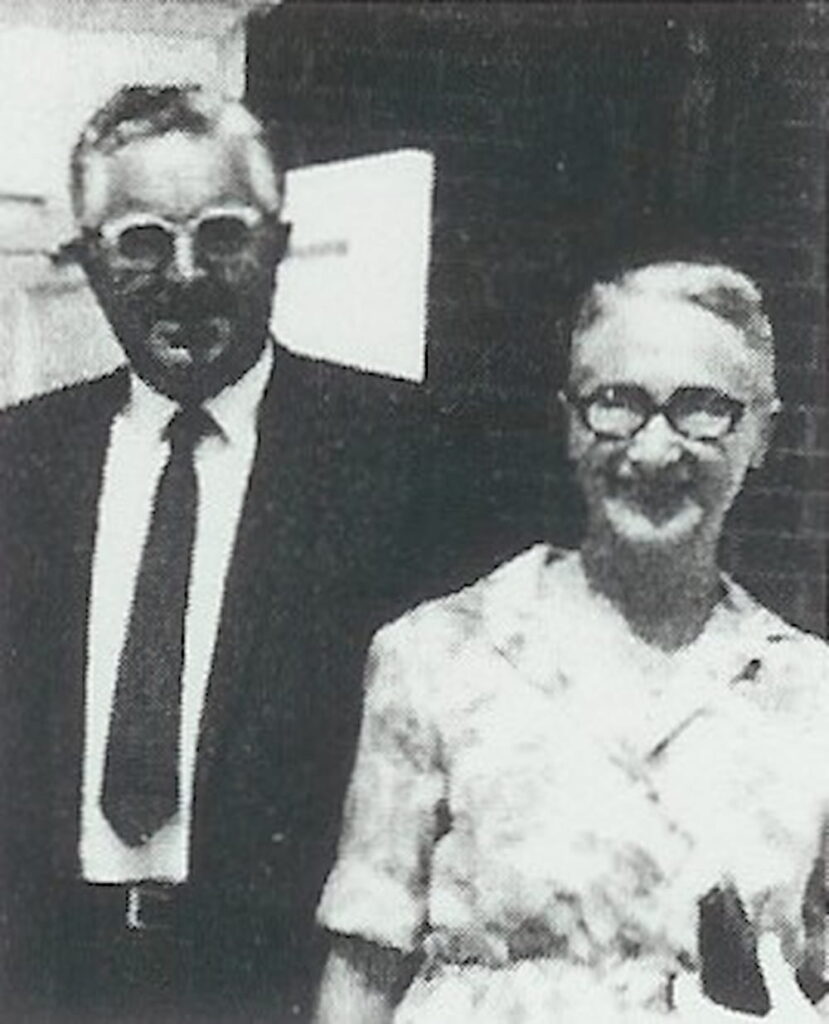

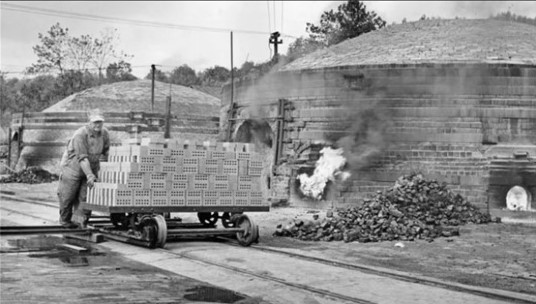
Notes taken from Interview with Mr. Gray at Medora Brick Plant site. Present were Laura Renwick from the Southern Office of Historic Landmarks Foundation of Indiana in New Albany - Marina Gill, local historic landmarks consultant, Mr. Gray - Steve Graves, brick plant's marker applicant and host of MedoraBrickPlant.com.
Location
Plant is about 1.1 -1.5 miles from Medora town & south along the B & O rail line.
There was a hill that sat behind and between the horse barn and the power plant/workshop that was excavated up through about 1938, said Gray, providing much material. Also to the west across the Brick Plant Road leading up the hill there was a large hill that was excavated.
The Ralph Gray family lived in a house just west of the plant.
- From the hayloft of a barn near the Gray home 1920 an aerial photo of the brick plant was taken from the hay loft (photo that Paul Carr of Vallonia has and a copy of which was displayed at the 2005 Jackson County Fair - Antiques Building.
- There was a hill west of the office across the hill road) that was excavated. Steam shovels but also electric ones were used to excavate shale, Gray said.
Gray said that all the kilns were not built at the same time, but that by 1936 there were 11 kilns built with #12 in the southeast corner being built in 1954 or 55. The “horse barn”, or what originally was built as such, Gray says was built about 1936-37 and still stands. A 40’ x 70’ small storage shed still stands today in the middle of the complex.
Kilns
Kiln walls are about 4’ thick. Kilns (floor, walls and dome) were made of entirely fire brick - also referred to as refractory brick. Stacks likely also of firebrick.
Domes were self supporting. Dome brick was different in that their sides were shaved (tapered) and by pounding in a key (locking) brick say every 4th or 5th brick at the domes base the those bricks would be secured, then the pattern repeated. By the time the process was at the top of the dome, just key brick were used.
Domes lasted about 24 years, Gray said. Through normal expansion and contraction from firing the kiln 2 or 3 times per week, the dome brick would loosen and make what appeared to be a crack. The dome would be disassembled, and the brick reused in rebuilding the dome locking all brick in tight again like when it was first constructed. Dome brick could be used 2 or 3 times. Domes were constructed from about 15,000 brick.
A look up at a self-supporting kiln dome today and the hole in the ceiling's center from which measurements were taken to know when the firing of the bricks was complete.
There were10 fireboxes distributed evenly around the base of each kiln where coal was hand fed.
Brickmaking
A few facts - quickly recited by Mr. Gray.
- It took 2 yards of material to make 2000 brick.
- Brick took 21 days to make – from excavation of material until send off or storage of newly made brick
- 1000 face (wall) brick weighed 4000 pounds.
- Barium was for a time used by brick producers as a congealing agent to make brick set up faster. It also brought out the natural color of the brick by cutting the white (chalking) aspect to finished brick.
Gray said that the plant had about 6.4 million brick in inventory on the property. He spoke about taking inventory regularly from a high vantage point to the west of the property. Coal for firing the kilns came by rail in the beginning and later by truck.
In the1970a the EPA (Environmental Protection Agency) came in and required reduction of the smoke to improve air quality. They insisted on 4 stokers per kiln at a cost of $25,000 per kiln. These 5’ x 5’ stoker boxes were built inside the kilns and were fed steadily by machine such that the visible smoke was largely eliminated. But these cut only visible emissions. The result was the brick plant’s cost for compliance on their 12 kilns was $300,000 and the price of brick was raised $13 per 1000 as a result.
The plant had 24 hour watch during its six production days per week. Gray said he only got to sleep good one day a week - Sunday night I believe he said. Gray was quick to say that there “are 160 hours in a work week” and that 4 kilns were fired a week. At other times kilns were being loaded for firing or unloaded after firing. And about 48 hours between firings. It is said in other references to be 54,000 brick a day 324,000 a week. Before motorized forklifts came along plant workers moved brick around by using moveable small sections of narrow gauge steel track. They'd set tracks along various pathways and used 3 foot by 5 foot carts to move 600 brick per cart to the kilns to be fired and out again to rail cars or storage. Track still visible today.
In a kiln firing: after the kiln was loaded with about 75,000 brick the doorways would be bricked up then mudded over to seal the kiln (except for the fireboxes, tunnels and stacks) then:
1st - the temperature would be raised slowly over 24 hours to reach 600 degrees.
2nd - raised steadily again the next 24 hours.
3rd - and finally raised to about 1600 degrees by 72 hours from first firing. After which time the “settle” was measured every two hours. The settle was measure from the top of the kiln dome. There was a metal plate over the ~2’ diameter dome hole and the plate had a hole in it down from which a measure could be made to the top of the brick stack.The kiln was almost entirely filled with bricks to be fired - close to the walls and up near the top of the dome. Notes from earlier Gray conversation said that when there was a 12- ½ inch settle the brick were done. The kiln dome center is about 30 feet off the floor.
But the temperature was not to go above 1850 degrees other wise the brick would burn up – making 'clinkers' a cindered finished brick. Gray said there was a plant in Indiana near Cayuga that specialized in clinkers. Both in the form of roughed exterior brick and by burning up the brick and then busting it up into cinders as in cinder running tracks at high schools and colleges.
Kilns were worked in sequence and one stack serviced 3 kilns via an underground system of tunnels. But a stack could be used in connection with one kiln firing at a time.
In about 1936 the plant equipment was powered by a large 4 piston diesel engine – which required fuel oil and its holding tank. There was also a smaller engine as back up.
There was well water and pond water. Gray said that as a boy in the 1930’s he at times took his bath in those ponds.
Workers in later years would come in with clean cloths and change into work cloths. After work most would shower and re-dress.
World War II and After
The plant closed in the spring of 1942 and reopened in the spring of 1946. James Heller had been in the service during the last part of World War II and Joe Robertson had died.
During this interview Bernard Gray referred to Mr. James Heller, president of the brick company ~1946-1992 (companies actually since he also owned controlling interest in the Brownstown Brick & Hollow Ware Co. as well), as “a prince of a man”, as “a very private man” and as having a manner that was “strictly business.” Gray said he sat across the desk from Heller in one half of the two room the small plant office) for 24 years ... and…never was invited to his (Heller’s) home for example. And on Gray’s last day of work at the plant having served for 46 years the last 24 as Superintendent, Heller handed Gray his last check (for the normal amount of pay due) and said “well that makes us even” - no final bonus, profit share, etc.. Heller died eight years later with an estate estimated / rumored to be about 14 million dollars, according to Gray.
Mr. Gray said that Mr. Heller's management style including walking around including on and off the property without prediction. He would arrive to work for example by parking on the eastern side of the plant property and walking in through the complex. He would usually leave for the day at various times and always without announcement to anyone. This would have the effect of keeping everyone on their toes, though Mr. Heller never spoke to managers and foreman about his rationale for this.
Brick Used to Modernize Buildings
A lot of brick in the later years of plant operation went to renovate and brick up windows in commercial buildings in the Midwest and New Jersey, Gray said. These buildings were no longer dependent on sunlight as internal light or on air in from windows – switching over to electricity and air conditioning. Mr. Heller trying to collect a debt from a client in Detroit using a Detroit attorney who offered to use muscle to get the debt collected and as a result Mr. Heller felt that if they’d do that to collect a debt from a client they might send someone his way so he swore off shipping things Detroit way.
Medora Brick Plant supplied the brick to Purdue University for about 20 years (~1960-1980). They became the preferred supplier over the Brazil / Veedersburg plant which had run out of clay and had to get material elsewhere, which changed the color of brick that they were able to produce and provide Purdue. And there were some management problems at that plant as well, according to Gray (who himself was Medora Superintendent ~1968-1992). Some brick to Ball State as well said Gray.
The industry average in the 1960’s to 1990’s was that brick plants produced about 60% of their brick for architects (commercial) and 40% for residences. Medora’s percentage through those years, said Gray, was 50 -50.
There weren’t many accidents at the plant, Gray said. They had a good worker’s comp rate as a result. “A mashed toe now and then but that was about it.”
Gray said by the 1980’s men did not want to work as hard or have to work as hard as one had to at the brick plant. There were easier jobs elsewhere paying as much or more with benefits, etc.
There always seems to be a market for all kinds of brick Gray said and that once, they combed the plant to fill a client order for 11,000 of the most misshapen marred bricks they could find to be used for a unique look in construction project.
Gray commented that the brick business is a good business even for the future. “Brick doesn’t go out of style and the industry isn’t going to be moved out of the country because the cost of shipping the heavy product would be to great (back into the United States and elsewhere).
The two biggest producers of brick nationally (1960's-1980's) Gray stated were General Shale and Acme Brick in Ft. Worth, Texas. General Shale provided all the brick for the Oak Ridge Tennessee nuclear power plant project at a phenomenal profit.
By early 1990 the brick plant had 22 shares holders dividing 750 shares. Gray said there was dissension within the Board as to whether or not to close the plant but in the end, production was stopped at Thanksgiving November 1990 and officially in January 31, 1992.
It was mentioned that some if not all of Medora's brick making machinery and equipment after its closing went to a brick plant in Brazil, Ind. (near Terre Haute).
July 20, 2005 Interview
Location - kilns - brickmaking - plant operation - WWII and after
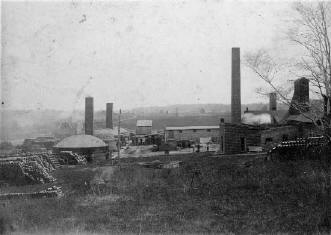
October 14, 2005 Interview
Jackson Brick and Hollow Ware - Joe Robertson - Jim Heller
Notes from a chat with Mr. Gray on a bench in front of his garage at his home in Medora late afternoon Saturday Oct. 14, 2005. Paul Carr was also there having toured me around earlier that day including a visit with Mrs. Jim Heller at her home - just Paul and I. - Steve Graves
Regarding Jackson Brick and Hollow Ware Co. (JBHW) in Brownstown
"Now follow me on this - " said Gray. "Across the road and train tracks from what was to become the Jackson Brick and Holloware Co. was the (Jonathan "Jont") Robertson farm (NE Brownstown area). His son was Joe (Joseph M.) Robertson. The site for that plant was on land owned by Thor Heller, brother to John Heller."
John Heller had a farm SW of Brownstown about 1 mile south of Rt 50 on the along the road to Vallonia where in addition to primarily farming John Heller made and sold brick and tile. (According to Paull Carr the little pond that can be seen there now is said to be the pit where the shale was ground up by a horse).
The Deal: "In exchange for stock in the Robertson’s JBHW John Heller would cease his operation in favor of JBHW. Basically they bought up the competition" said Gray. JBHW was born and at about the same time the Medora area leaders were founding Medora Shale Brick Co. were organizing their company (July 1904).
In the 1920's with an economic slowdown that preceded the Depression, Medora Shale Brick Co. went bankrupt. The Robertson and John Heller purchased it about 1923. Joe would run it while John farmed. In the 1930’s Joe would mentor John Heller's son Jim Heller (b. 1910) to take over the operation of both the Brownstown and Medora plants - which Jim did after serving in WWII.
"Not particularly wanting to farm like his father Jim Heller went to work at the Brownstown plant in the early 1930’s. "Jim would later say that he had inherited enough that he wouldn’t have to work the rest of his life but he wanted make something of his life" commented Gray.
Joe Robertson
Joe Robertson developed JBHW which primarily produced drain tile from what became 9 kilns and 5 stacks, machine shed and an office - which may have been Thor Heller’s home and did serve as the administrative office for both the Brownstown and Medora operations. Joe Robertson's management of the plants including the Medora plant from about 1923 through the early 1940's put things on a solid and profitable road. And after WWII Jim Heller's watchful eye and business acumen took the operations even further.
Interviewer's research about Joe Robertson and some more information from Bernard Gray –
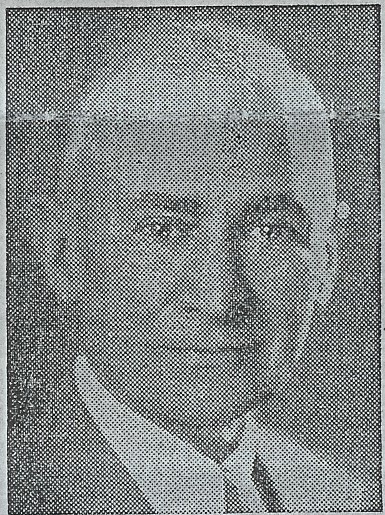
- Joe Robertson and his father Jonathan "Jont" Robertson purchased the Ewing Mill Company around 1900 known as Robertson Industries since 1960. After serving in the Indiana house in 1900 and 1902, Jont Robertson organized the Jackson Brick and Hollo Ware Co. in about 1906 and was a full partner along with his son Joe in the Medora Shale Brick Company in 1923 which they renamed Medora Brick Company.
- Like his father, grandfather and great-grandfather Joseph M. "Joe" Robertson became involved in state politics. He served in the Indiana house in 1917; he joined the state senate in 1933 and resigned in 1938 to fill the vacant post of state treasurer, a position he held until 1941.
- Gray shared the story that "While Joe Robertson (Democrat) was Treasurer (listed officially as 1939-1941) and could among other things oversee state payments to contractors on building projects - there was 'a rule' that state buildings would use only Indiana brick in their construction. There came an occasion, with Robertson out of states, that the legislature took an impromptu vote and overturned the requirement" - to the dismay of Robertson and the Indiana brick manufacturers.
- When WWII started Jim Heller didn’t want to go – he wanted to stay with the plants that he was taking increased management responsibility said Mrs. Heller (Oct. 14, 2005). Bernard Gray said "Joe Robertson - (perhaps using insight and influence - advised Jim to choose the Army versus other corps of service. After basic training and service in the Washington DC area Jim was assigned to duty at Attabury, the WWII prisoner of war holding facility located just north of Jackson Co. in Columbus, Indiana. Jim completed his duty then returned to Jackson Co. to start up the plants which had been closed during the time Jim was away."
- According to Gray "A clerk in Robertson's Treasurers office (himself a Jackson Co. resident) said that Robertson's salary was $4000 a year and that he banked his check and didn’t touch the funds during those years."
Jim Heller
According to Mrs. Jim Heller, a typical morning for her husband was to wake at 4am and head towards the Brownstown plant to check on things. Bernard Gray said Jim Heller would often then be down to the Medora plant by 5:30am when a new crew and the plant manager would be coming to work. After the work day began would go home for breakfast and go on with his day.
Gray said that he never new Jim Heller's schedule. Heller would come as well go unannounced to anyone. He’d park at different places on the plant's perimeter and enter the grounds from different directions keeping a watchful eye on his operation.
Mrs. Heller had told Paul Carr, of Vallonia, that it was the saddest day of her husband’s life when he had to close the Medora plant.
(Interviewer's note - on every interview occasion this past year (2005) Bernard Gray referred to Jim Heller as a "prince of a man" and also, at other times, sharing his experiences that supported his feelings that Heller as an owner was "all business". (I noted that Mrs. Heller was still alive at the time and saying Heller was a prince of a man would also be appropriate.)
Have a Bernard Gray story?
Email MedoraBrickPlant.com webmaster