Stories - got a story? Email Us!

Brick plant truck drivers were considered celebrities
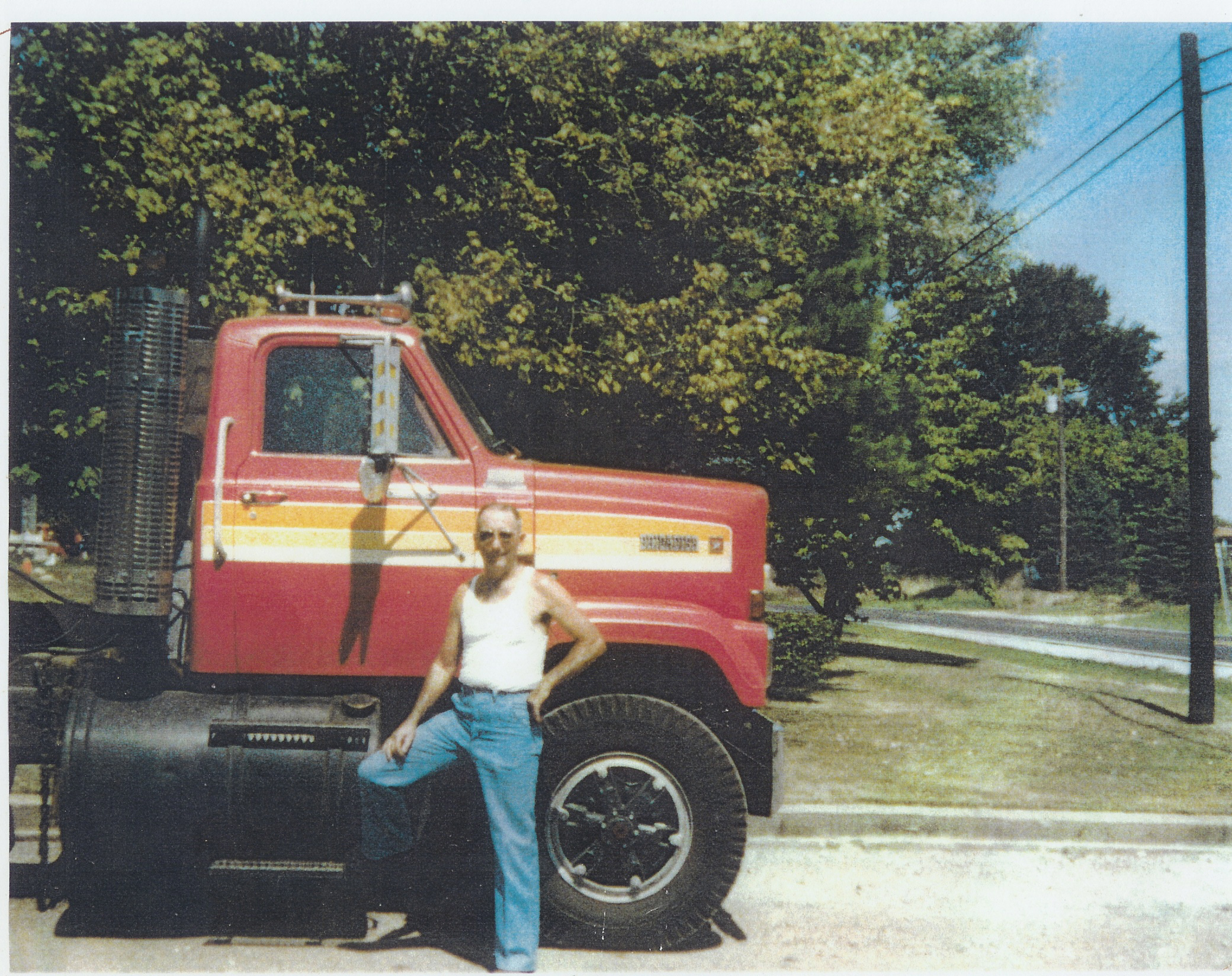
My name is Joe Holbrook I live in Brownsburg, IN and grew up in Medora, living next door to Haley Reynolds and his wife Helen. They were known to everyone as "Pap" and "Mim". Pap drove a brick truck for the brick plant. I was known as Joey back then and Pap's grandson Kevin (Jake the Snake) Davis was my best friend. Every now and then, Pap would let us ride in the truck with him out to the brick plant to drop off the empty trailer and pick up the next day's load. This was always exciting!
The brick truck drivers were almost celebrities in Medora. The ones I remember best are Haley (Pap) Reynolds, of course, Chin Trueblood, Boob Davis and Bobby Lane. Bernard Gray (plant superintendent) lived just up the street from my family there on George Street. His red 1/2 ton GMC Medora Brick truck was a familiar sight.
Francis Trueblood was one of the brick truck drivers. The whole town knew him as "Chin" Trueblood. He was one of Medora's more colorful characters. Nearly everyone my age and older has a Chin Trueblood story. Chin mowed yards and cemeteries in the summer. I lived next to the ball park in town. The part of our yard that got mowed was a little over an acre and I did it with a push mower. More than once, Chin helped me cut my yard with his rider so I could go play baseball at the park.
Later, when I came home from college to visit my parents, Larry and Billie Holbrook, I always came into town through Vallonia. As soon as I turned off of SR135 onto SR 235 headed into town, I could often see the smoke from the brick plant. I knew then, that I was home. It was always a comforting sight.
Most people that I meet don't know where Medora is but, those who do, know about it because of the covered bridge, Burcham's round barns or the brick plant. My wife, Marla, and I were visiting with one of her childhood neighbors in Indianapolis. As it turns out, her neighbor used to sell fork lifts to Jim Heller.
The brick plant is part of my childhood. One of a number of treasured memories and experiences collected while growing up in the small town of Medora.
Judging the weather by drift of brick plant smoke
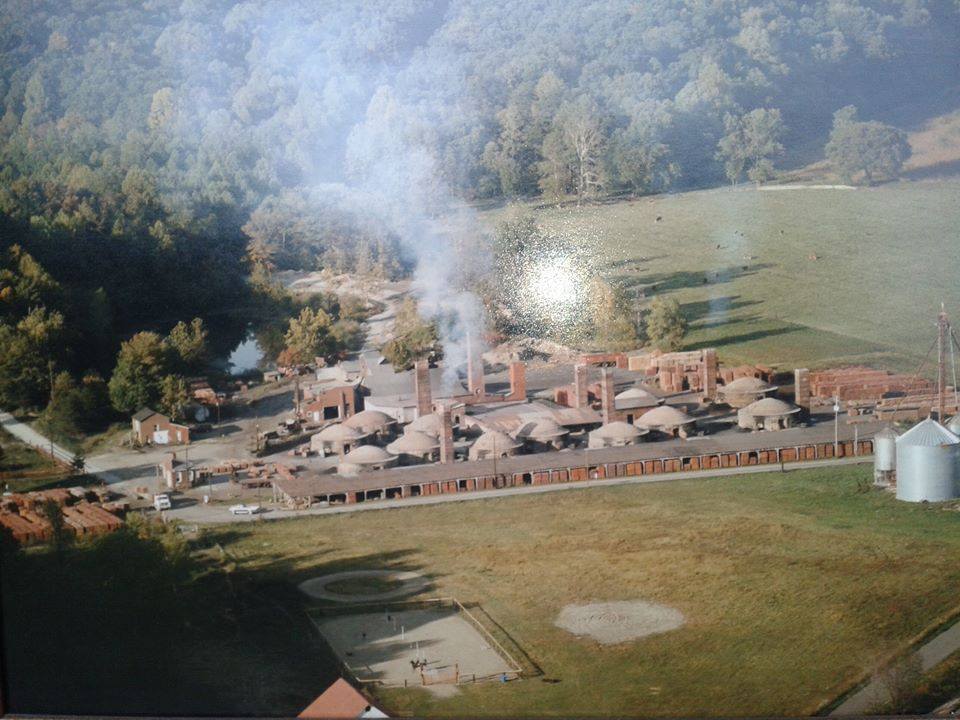
It was said that if you were out in the field and smoke from the brick plant went up the hollow (Hughes Holler) behind it you had better seek shelter, because it WOULD rain. It worked every time I saw it.
Jerry Chastain retired school administrator grew up in homes near the brick plant
chastain@indy.net
This was confirmed also by Larry Bennett who wrote in Feb. 2006... "My grandfather (Pappy) Chester Bennett lived on the Shortridge farm next to brick plant from 1958-1976 he moved in '76 but still worked there until 1984. Jerry Chastain (my high school shop teacher) is right about the smoke going up into Hughes Holler, if you saw it going that way you could count on rain in 24 hours. Henry Lonsberry is my maternal Great-Grand Father. Also just today (2-25-06), Paul Carr visited and we are sure that the photo of the 2 kilns(?) and farmhouse in flood waters are not of the brick plant @ Medora."
Employee Confronts Superintendent at Outhouse
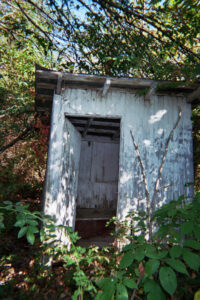
Thinking that he had the plant's superintendent, Bernard Gray, cornered in the outhouse, a disgruntled discharged employee had come back onto the property - shotgun in hand! The fellow had been released earlier in December for not working the six day week that was required of all laborers. His annual bonus, as with all employees, was to be given at Christmas time, but was withheld. He wanted to change that. Gray, without injury, did calm the fellow down and the bonus was given but not the re-employment that the fellow also asked for.
Wheeling Bricks Around was Tough Work
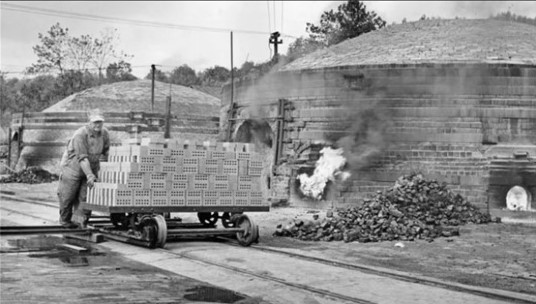

Brick plant employees known as 'tossers' and 'setters' wheeled bricks in and out of the kilns on specially made and balanced wheel barrows.
"100 bricks made a full wheel barrow load – 50 on one side 50 on the other. Workers loaded those 3 or 5 brick at a time. The weight was 400 pounds but the structure of the especially made and balanced wheel barrows was that such was maybe only 50 lbs weight down on the wheelers hands. Wheelers would push off slide down the ramps taking brick out of the kilns to storage. And some employees could steer a full wheel barrow with one hand" explained long time plant superintendent, Bernard Gray. "A normal expected work load per day was 90 wheelbarrows - loaded and unloaded."
In later years, after WWII, flat bed carts on tracks were were used to move large loads bricks to and into the kilns, and out of the kilns, with one man pushing thus lightening the load considerably.
Medora Brick Co. Wins by the Hand of God or was it the Governor of Kentucky?
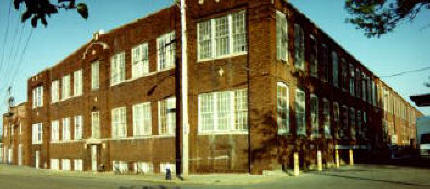
A brick dealer an hour away called the Medora brick plant's salesman to invite him to a meeting where brick samples were going to be reviewed and a selection made for placement on a large university building to be constructed in the State of Kentucky.
"Your brick is going to be selected" the dealer said. The Medora salesman responded "I thought you said it was to be a selection meeting ... how do you know our brick is going to be chosen?" "Just come down next week" said the brick dealer.
The salesman and dealer walked into the room where 28 different competing brick company samples were laid out along tables. In came the Governor of the Kentucky who was known as a real politician and who was the one who was actually going to select the brick!
The Governor commented that all of the brick were so beautiful. Any one of them would be beautiful on the building. He said he didn't know how he could possibly pick one over another. And, since there was no good way to chose perhaps the fairest thing to do would be for him to close his eyes, and walk amongst the samples and at some point put his hand down, thus selecting the brick that would be used. Respectfully and probably reluctantly all agreed to the governor's proposal.
With eyes closed the Governor walked the samples three or four times, stopped, put his hand down.... directly on Medora's brick!!! And everyone was said to have walked out happy, believing that they at least had a "fair chance".
James P. "Jim" Heller's schedule and management style
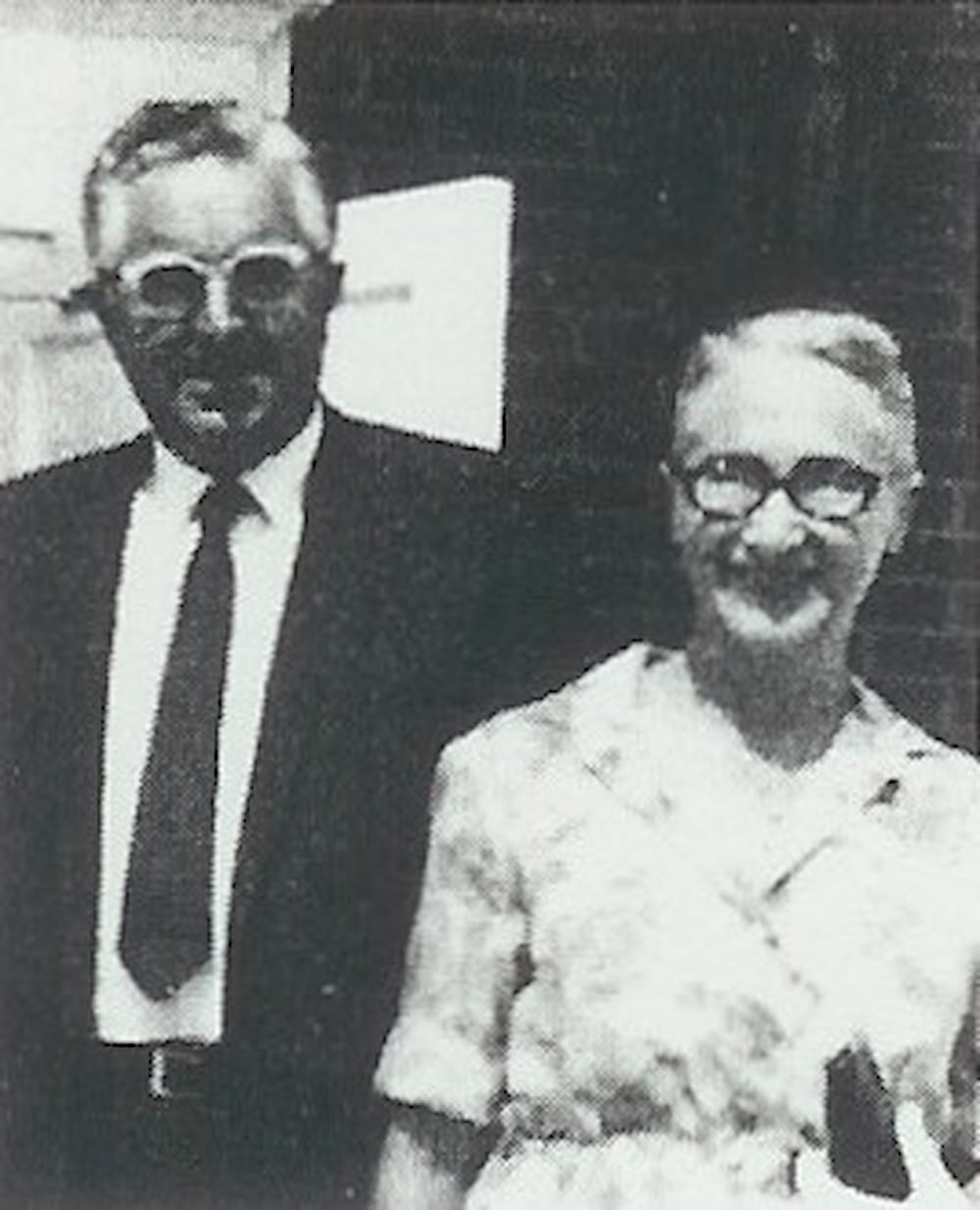
According to Mrs. Jim Heller, Mildred Inez Heller, a typical morning for her husband was to wake at 4am and head toward the Brownstown plant to check on things. Bernard Gray said Heller would often, then, be down to the Medora plant by 5:30am when a new crew and the plant manager would be coming to work. Heller would then go home for breakfast and go on with his day.
Bernard Gray said when he (Gray) was Medora plant superintendent, he never knew Heller's schedule. Heller would come as well go unannounced. He’d park at different places on the plant's perimeter and enter the grounds from different directions keeping a watchful eye on the operation.
Offer to put muscle to the collection of a debt
Jim Heller, plant owner at the time, tried to collect a past due payment from a client in Detroit by engaging a local attorney there. After the attorney's initial efforts were not successful, he sent word back to Heller that if he (Heller) really wanted the money, a couple of persuasive fellows could be arranged to visit the client and "just get the money". Heller felt that if that's how they did things in Detroit that, in retaliation, the client might then, in turn, send some fellows his way to Medora, so he didn't go further to collect the debt and he swore off shipping things to Detroit and other places that might operate the same way.
Brick House sent by mail
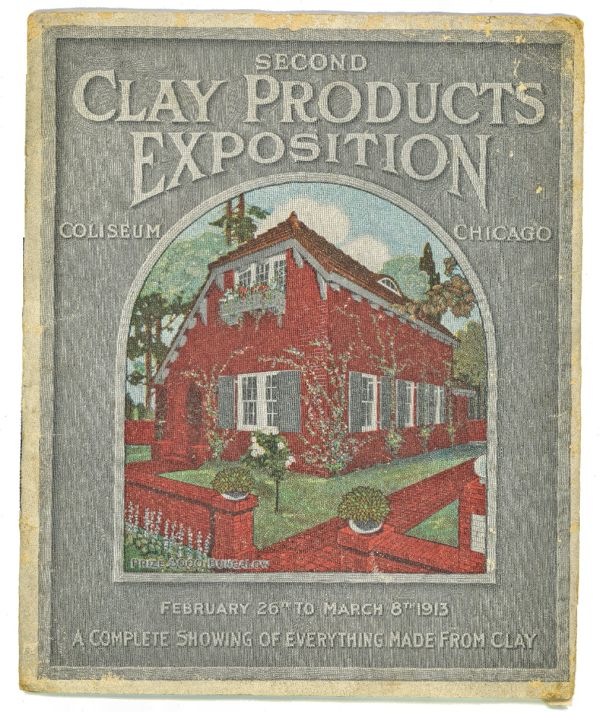
BRICK HOUSE SENT BY MAIL / Uncle Sam's Parcel Post Gets Its Heaviest Package
[Seymour DAILY REPUBLICAN, 21 February 1913 p1c2]
C.C. McMillan, of the Medora Shale Brick Company, sent by Parcel Post this morning a brick of local manufacture to be used in building a brick house at the Coliseum Chicago during the Clay Products Exposition which is to be held February 26th to March 8th. This brick will be one of 25,000 sent by parcel post from every brick plant in the United States to be used in the construction of this house, which will be given away and re-erected after the exposition.
The idea was originated to test the merits of the Parcel Post system and it is certainly a novel one. A record will be kept of each brick from the time the brick is mailed until it is delivered in Chicago in order to see how speedily Uncle Sam can deliver a brick house by mail.
It is probable that Uncle Sam's mail carriers in Chicago will not be overly enthusiastic for this method of delivery of a brick house. Other mail carriers throughout the country will watch the experiment with interest and fear and trembling. While the brick fireproof home is becoming more and more popular because of its permanency, economy and superiority, it is not probably that they will be delivered by mail to any alarming extent.
Hot Bricks Cause Fire
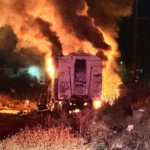
Bricks fired in the kilns eventually were wheel barrowed down to the wooden box cars waiting on the B & O rail spur. At one point early on (year?), according to a story passed down in his family, Ralph Gray said bricks which weren't fully cooled were wheeled to a box car. The box car caught fire due to the heat still held in the bricks. The time allotted for cooling was surely extended as a result.
Haven for Hobos
Paul Carr of Vallonia, well known in Jackson County for his historical knowledge and efforts, was raised on the farm that sits south and across the current rail line south of the plant. Paul said that during the height of the Depression, hobo’s traveling the rail line used to be attracted by the brick plant’s lights and heat, and would try to hang out there during cooler months in late fall and early spring when the plant was operating.